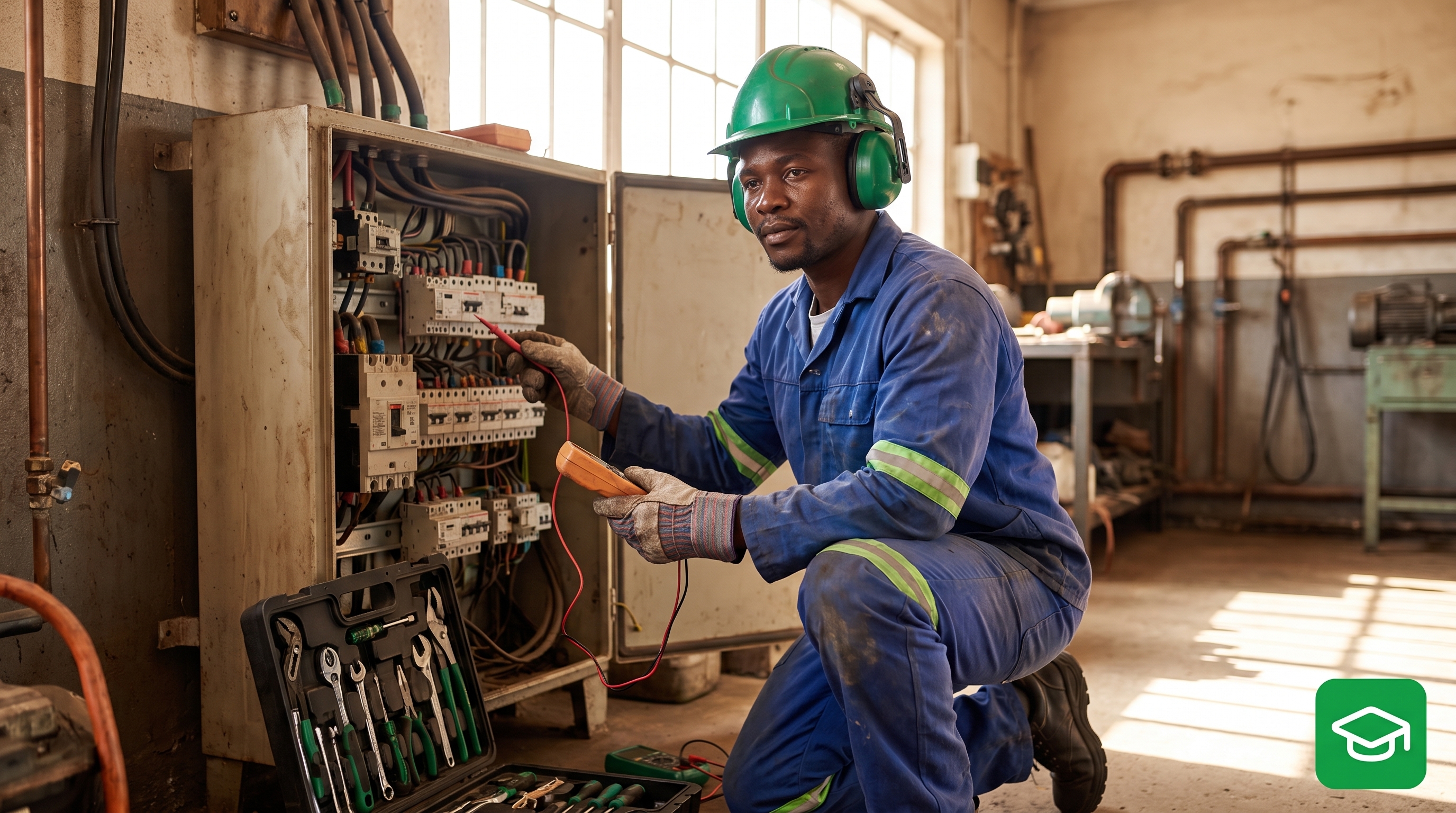
The average monthly salary in South Africa sits at around R29,690 according to Stats SA's data. A lot of the jobs on this list pay significantly more than that. None of them requires a university degree.
That is not a motivational statement. It is a fact about the South African job market. Pnet's Head of Data Insights confirmed that demand remains strong in fields like sales, construction, IT, and administration, and that in many of these roles, practical skills and real experience outweigh formal qualifications when employers are making hiring decisions.
This article covers the jobs that actually pay well without a degree, what each one requires to get into, and what you can realistically expect to earn.
A Note Before You Read the Salaries
Salary ranges in South Africa vary significantly based on experience, location, the size of the company, and whether you are salaried or commission-based. The figures here come from Pnet, PayScale, BusinessTech, and Stats SA and reflect current data. Entry-level earnings in most of these fields start lower than the averages shown. Senior and experienced earners can go considerably higher.
None of these jobs are easy. They require real skill, real training, and in most cases a specific licence or certification. What they do not require is a three or four year university degree.
1. Pilot
Commercial pilots are among the highest earners in South Africa without a traditional degree. During a recent wage dispute, it emerged that FlySafair captains earn between R1.8 million and R2.3 million annually, putting them firmly in the top 1% of South African earners.
You do not need a university degree to become a pilot. You need a Private Pilot Licence followed by a Commercial Pilot Licence, both issued by the South African Civil Aviation Authority. Getting there requires flight school, logged flight hours, and passing theoretical and practical examinations. It is expensive to train and competitive to enter, but the earning ceiling is higher than most degree-required professions.
2. Real Estate Agent
Real estate is one of the most accessible high-earning paths in South Africa for people without a degree, provided you are willing to work on commission.
To practice legally, you need to complete the NQF Level 4 Real Estate qualification and register with the Property Practitioners Regulatory Authority. Base salaries for agents typically range from R20,000 to R36,000 per month, but commission from selling high-value properties can push annual earnings far beyond that. Successful agents working in the luxury market or high-volume residential areas can earn well above R800,000 per year.
Advertisement
The ceiling in real estate is genuinely uncapped. The floor is commission-only and unpredictable, which means the first year is the hardest. Agents who build a strong client base and understand their market well tend to grow their earnings significantly year on year.
3. Construction Manager
Experienced tradespeople who move into management roles in construction can earn serious money without ever holding a degree.
Construction managers in South Africa earn an average of around R600,000 per year, roughly R50,000 per month, depending on the size and complexity of the projects they oversee. What gets you there is years of hands-on experience in a trade, whether that is plumbing, electrical, or civil construction, combined with certifications in project management, site safety, and relevant industry training.
The infrastructure projects currently running across South Africa, including Eskom's grid rehabilitation, Transnet upgrades, and large-scale road maintenance, are creating consistent demand for experienced construction professionals at management level. This field is not going quiet anytime soon.
4. Underground Miner
Mining remains one of South Africa's most significant industries and it pays workers without degrees surprisingly well, especially underground.
The average annual salary for underground miners sits at around R503,654, which works out to roughly R42,000 per month. Experienced miners and those in specialist roles earn more. The work is physically demanding and carries real safety risks, but it compensates for that with wages that significantly exceed the national average.
Entry into mining does not require a degree. It requires a medical fitness certificate, completion of relevant safety training, and in many cases a learnership or apprenticeship through a mining company. Companies like Anglo American, Sibanye-Stillwater, and Gold Fields run structured entry programmes for people without formal qualifications.
5. Train Driver
Transnet Freight Rail train drivers earn an average of around R445,000 per year, roughly R37,000 per month, according to PayScale data.
Becoming a train driver requires completing Transnet's own training programme, which covers locomotive operation, rail safety regulations, and technical systems. No university degree is required. The selection process is competitive and the training is intensive, but the job offers stable government-linked employment with above-average pay and benefits.
6. Boilermaker
Boilermakers construct, assemble, and repair metal structures, pressure vessels, and industrial equipment. It is a skilled trade that pays well at every level of experience.
Advertisement
Entry-level boilermakers earn around R317,000 per year. Senior boilermakers with experience in industrial or petrochemical environments can earn up to R545,000 annually. The path into this trade goes through an apprenticeship, typically four years, at the end of which you can write the Red Seal trade test and become a qualified artisan.
Red Seal artisans, including boilermakers, are among the most in-demand skilled workers in South Africa. The shortage is real and employers compete for experienced tradespeople, which keeps salaries strong.
7. Electrical Technician
Electricians and electrical technicians are consistently in demand across residential, commercial, and industrial sectors.
Entry-level electrical technicians earn around R23,000 per month. Experienced technicians working in industrial settings or specialising in high-voltage systems can earn up to R34,000 per month. Master electricians who run their own operations earn considerably more.
Like boilermaking, entry is through an apprenticeship rather than a degree. The trade test at the end is regulated by the Quality Council for Trades and Occupations and is nationally recognised.
8. Firefighter
Firefighting pays better than most people assume.
The average annual salary for firefighters in South Africa is approximately R488,951, around R40,000 per month, depending on the municipality and experience level. Senior firefighters and those in specialised rescue roles earn more.
To become a firefighter you need a matric certificate, a valid driver's licence, and physical fitness. Most municipalities run their own training academies where recruits complete fire-fighting certification. No degree required.
9. IT and Software Development
This is the field that surprises people most on this list.
Software developers and data analysts in South Africa can earn up to R60,000 per month according to Pnet's 2026 salary data. The entry point for many of these roles is not a degree. It is demonstrated skill, a strong portfolio, and the relevant certifications.
Pnet's data consistently shows that IT is one of the strongest hiring markets in South Africa and that employers in the sector care significantly more about what you can build and prove than about what institution gave you a piece of paper. Bootcamps, online platforms like Udemy and Coursera, and self-directed learning have produced working developers who earn more than many degree holders in other fields.
Cybersecurity is the fastest-growing corner of this sector right now. CompTIA Security+ and other industry certifications are taken seriously by employers and do not require a university degree to obtain.
10. Sales and Account Management
Advertisement
High-performing sales professionals in South Africa earn well above the national average, and the field is almost entirely performance-based rather than qualification-based.
Sales consultants start at around R16,000 per month at entry level. Account executives and senior sales managers in industries like financial services, insurance, and technology earn significantly more, often between R40,000 and R80,000 per month when commission is included. The ceiling in commission-driven sales roles is genuinely uncapped for the right person.
What employers care about in sales is your ability to build relationships, understand a product, and close. Your matric certificate gets you through the door. Your results keep you in the room.
11. Truck Driver (Code 14)
Long-haul truck drivers with a Code 14 licence and cross-border logistics experience earn between R200,000 and R450,000 per year depending on the employer and routes driven.
Some transport companies add bonuses for fuel efficiency and safe driving records, which push earnings higher. The licence itself requires passing a specific driving test. No degree is involved at any point in the process.
What All of These Jobs Have in Common
None of them hand you a salary for having a certificate. Every single one rewards practical skill, experience, and performance.
The students and young people who earn well in these fields are the ones who took the training seriously, built their skills over time, and did not wait for a degree to give them permission to start. A learnership, an apprenticeship, an industry certification, or a self-taught portfolio got them in. Consistent performance kept them moving up.
If you are exploring routes into the job market that do not go through a traditional university, understanding the difference between the qualification types available to you is worth your time: Differences Between a Diploma and a Certificate Course.
And if university is still part of your plan but you want to understand which fields are growing fastest and why, this article covers the current South African landscape in detail: The Fastest Growing University Programmes in South Africa Right Now.